
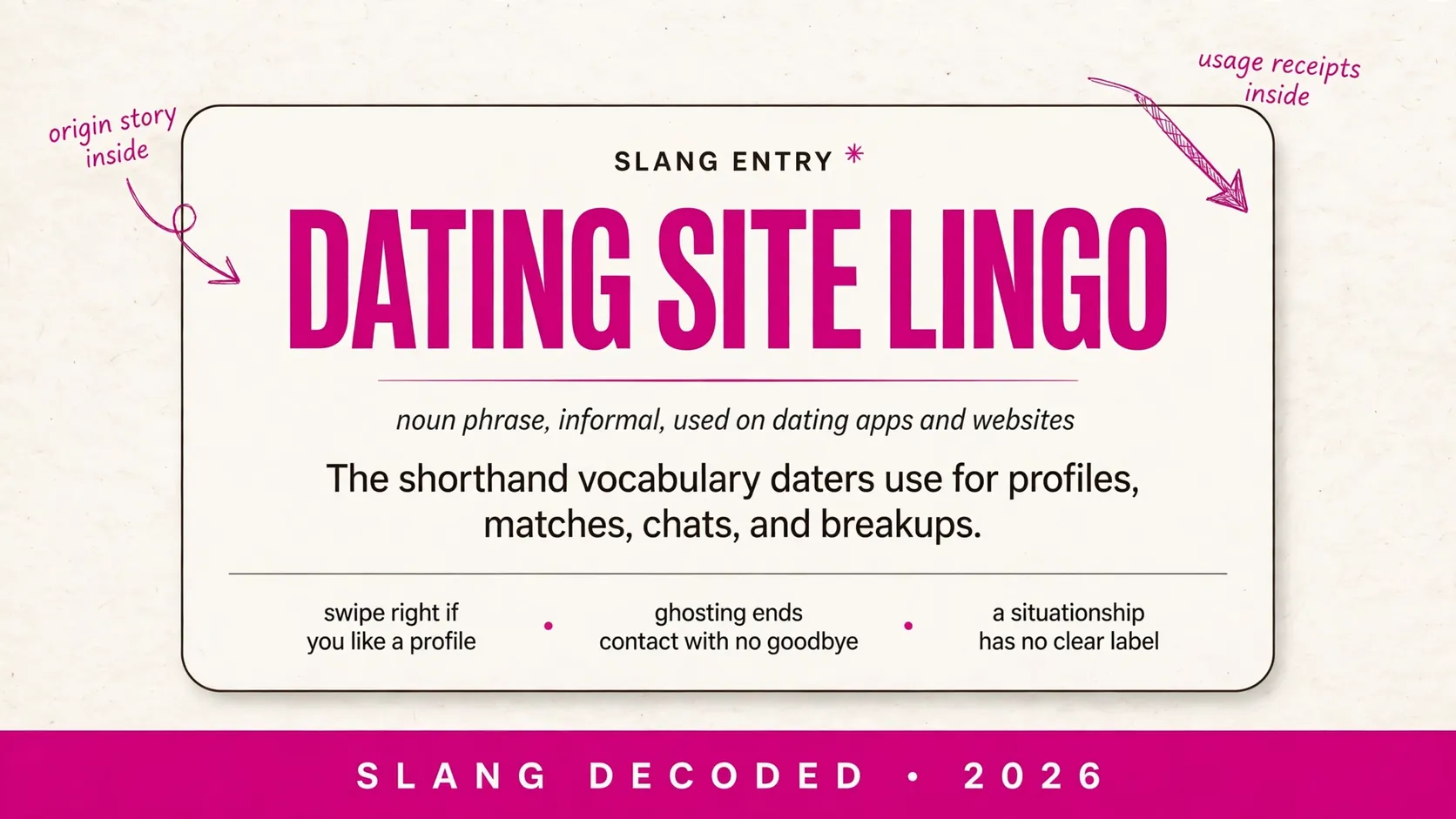
Dating site lingo is the shorthand vocabulary people use on dating apps and websites to describe profiles, matches, conversations, and breakups quickly. It turns a long story about interest, timing, or rejection into one punchy word that other users instantly recognize.
Once you learn the basics, bios stop feeling like code and chats stop feeling like guesswork. You can spot red flags faster, read intent more clearly, and reply with confidence instead of overthinking every message. This guide translates the most common terms in plain English.
Swipe Right Words That Start Every Match Story
Swiping is the first language of dating apps. A single gesture can mean curiosity, enthusiasm, or a polite pass, and the words around it tell you how strong the interest really is. Learning these terms helps you understand what happened the second a profile appears, disappears, or turns into a chat.
| Term | What it signals |
|---|---|
| Swipe right | You like this profile and want to see if the interest is mutual |
| Swipe left | You are passing on this profile for now |
| Super like | You feel strong interest and want the other person to notice first |
| Match | Both people swiped right and can now message each other |
| Unmatch | One person removes the match and ends the chat access |
| Boost | A paid feature that shows your profile to more people for a short time |
| Verified profile | A profile confirmed with a photo check or ID step by the app |
Profile Decoder for Bios That Say a Lot in a Little Space
Bios are tiny, so daters pack them with abbreviations and coded phrases. Some terms describe relationship goals, some describe lifestyle, and some quietly warn you that your values may not line up. Reading them slowly can save you a week of awkward chats.
| Term | What it signals |
|---|---|
| Looking for something serious | This person wants a committed relationship, not casual dating |
| Not looking for anything serious | This person prefers casual dating without commitment for now |
| Open to chatting first | This person wants conversation before meeting in person |
| No hookups | This person is not interested in casual physical encounters |
| Sapiosexual | This person feels most attracted to intelligence and sharp conversation |
| ENM | Ethical nonmonogamy, meaning open relationships with honest consent |
| 420 friendly | This person is open about cannabis use and wants a similar attitude |
Talking Stage Terms That Explain the Weird in Between Phase
The talking stage is the stretch after matching and before dating, when two people are learning about each other without a label. It can feel exciting, confusing, or both at once, and the slang for it is surprisingly precise. These words help you describe that uncertainty without pressuring someone for a label too soon.
- Talking stage means you are messaging regularly and testing compatibility before calling it dating.
- Vibe check means a quick test of energy, humor, and comfort in conversation or on a first meetup.
- Dry texter means someone who replies with short, low effort messages that make conversation hard to sustain.
- Double texting means sending a second message before getting a reply to the first one.
- Left on read means your message was seen but no reply followed, at least for now.
Slow reply means answers arrive hours later, which can mean busy, distracted, or low interest.
A talking stage does not have a fixed length. The healthiest move is to ask directly rather than guess from reply speed alone.
Ghosting and Its Cousins When Replies Just Vanish
Few parts of dating site lingo feel as personal as the disappearing act. Ghosting gets the most attention, but daters have named several softer and stranger versions of vanishing, returning, and hovering. Knowing the differences helps you name the behavior without blaming yourself for it.
| Term | What it signals |
|---|---|
| Ghosting | All contact stops suddenly with no explanation or goodbye |
| Soft ghosting | Replies fade to likes and short reactions instead of real messages |
| Orbiting | Someone stops replying but keeps watching your stories and posts |
| Zombieing | Someone who ghosted you returns weeks or months later as if nothing happened |
| Breadcrumbing | Small flirty messages keep your hope alive without real plans or effort |
| Benching | Someone keeps you as a backup option while dating other people |
| Slow fade | Replies get shorter and rarer until conversation quietly dies |
Red Flag Phrases Hiding in Plain Sight on Profiles
Not every warning arrives as an insult. Some arrive as jokes, humble brags, or dramatic bios that sound fun until you date the person behind them. These terms help you pause and look closer before you invest. Trust your gut when a profile feels entertaining but also a little exhausting to read.
- Love bombing means intense affection, gifts, and constant contact very early, often before real trust exists.
- Red flag means a warning sign that suggests a pattern of poor communication or disrespect.
- Drama free can mean a desire for calm, but it can also mean a refusal to handle normal conflict.
- No drama often works the same way, signaling low patience for honest disagreement.
- High maintenance is sometimes used unfairly, but it can also flag clashing expectations about effort and attention.
Do not waste my time can mean clear boundaries, but in an aggressive bio it can signal low patience for getting to know someone.
One red flag is a data point, not a verdict. Two or three together are worth taking seriously.
Green Flags and Good Signs Worth Swiping Toward
Dating site lingo is not only about warnings. Daters also use shorthand for kindness, clarity, and emotional safety, and those signs are easy to miss when you are focused on avoiding the worst outcomes. These terms describe behavior that tends to make dating feel steadier and more respectful.
| Term | What it signals |
|---|---|
| Green flag | A positive sign of kindness, honesty, or healthy communication |
| Clear communicator | Someone who states needs and feelings directly instead of hinting |
| Consistent texter | Someone who replies reliably without games about timing |
| Respectful boundary setter | Someone who states limits kindly and honors yours in return |
| Emotionally available | Someone who has space and willingness for a real relationship |
| Plans dates early | Someone who moves from chat to a real meetup without endless texting |
| Shows effort | Someone who asks questions, follows up, and makes room in a schedule |
Hookup Dating and Relationship Labels without the Awkward Ask
Modern dating uses many labels because people want different things, and guessing wrong can waste time or hurt feelings. These terms describe the shape of a connection, from casual to committed, without forcing a long conversation before the first coffee.
| Term | What it signals |
|---|---|
| Casual dating | Dating without exclusivity or long term commitment expectations |
| Friends with benefits | Friendship plus physical intimacy without romantic commitment |
| Situationship | A romantic connection that feels real but has no clear label |
| Exclusive dating | Dating only one person after a direct conversation about it |
| Open relationship | A committed partnership where outside dating is allowed by agreement |
| Monogamous | A relationship style involving romantic exclusivity with one partner |
| Long term relationship | A partnership built with future plans and sustained commitment |
Platform Specific Shorthand from Apps Dms and Dating Sites
Every app adds its own habits, and dating sites add a few older terms from message boards and classified style profiles. These words travel across platforms, but they started in specific places and still carry that flavor when daters use them today.
| Term | What it signals |
|---|---|
| DM slide | Starting a private conversation, often flirty, from a public post or story |
| IRL | In real life, meaning meeting or talking outside the app |
| Catfishing | Using a fake identity or stolen photos to deceive someone online |
| Kittenfishing | Using old or heavily edited photos to appear more attractive than in person |
| Profile stalking | Checking someone’s photos and posts closely before or after matching |
| Icebreaker | An opening message or app prompt designed to start conversation easily |
| Voice note | A recorded audio message that adds tone where text can feel flat |
How to Read a Bio Like a Local Instead of a Tourist
Start with goals before looks. A great photo cannot fix a mismatch in what you both want. Read the first line for intent, the middle for lifestyle, and the last line for humor.
Next, look for specifics instead of slogans. A bio that names a real hobby or a clear dating goal gives you something to ask about.
When the Lingo Helps and When It Hides the Truth
Slang helps when it names a pattern fast. Saying you were benched is quicker than retelling three weeks of mixed signals. In those moments, the vocabulary acts like a shortcut to honesty.
Slang hides the truth when it becomes a joke or an excuse. If a term lets someone avoid accountability, drop the label and describe the behavior in plain words instead.
A Smarter Way to Use These Words in Your Own Chats
Use slang to clarify, not to test or trap someone. Instead of accusing a match of ghosting after one slow day, say you noticed replies slowed down and ask if they are still interested.
If you want to go deeper, guides to ghosting, situationship, and catfishing explain the trickiest behaviors in more detail. Learning the wider vocabulary helps you recognize patterns early.
Why This Vocabulary Keeps Changing Every Season
New apps create new behaviors, and new behaviors need new names. Video dates, voice notes, and story replies have added fresh slang, while older terms still survive because the feelings behind them have not changed.
That is why fluency matters less than curiosity. You do not need to know every term to date well. You need enough vocabulary to ask better questions and describe what you want without apology.
Questions People Still Ask About Dating Site Lingo
What does dating site lingo actually mean?
Dating site lingo means the slang, abbreviations, and coded phrases people use on dating apps and websites to describe matches, chats, and relationships.
Is dating site lingo the same on every app?
Most core terms travel across apps, but each platform adds its own features, prompts, and habits that shape how people talk there.
Why do daters use slang instead of plain language?
Slang saves time, softens awkward topics, and signals that you understand modern dating culture without a long explanation.
How can I learn dating site lingo without sounding forced?
Learn the meanings first, use only terms that feel natural to you, and let the rest stay in your reading vocabulary until you need them.
What should I do if I do not understand a term in a bio or chat?
Ask politely for clarification, since a short honest question usually reveals more about intent than guessing from slang alone.