
When you ask what does snap score mean between friends, you are asking about the number shown beside a Snapchat username that rises when that person sends and receives snaps, and friends often treat it as a lighthearted sign of how active someone is on the app. It is not a grade, a ranking, or a secret rating of your friendship, even if it can feel that way when you compare numbers side by side. This guide breaks down what counts, what does not, and how to read the number without overthinking it.
What Your Snap Score Actually Counts
Your snap score is a running total tied to your Snapchat activity. It goes up when you send snaps and when you open snaps from other people, and it also reflects other activity inside the app over time. You do not earn it by just having an account, and you do not lose it by taking a break. It stays where it is until you are active again.
| Activity | Effect | Friend View |
|---|---|---|
| Sending a snap | Adds points | You look active |
| Opening a snap | Adds points | You replied |
| Sending to many friends | Adds per snap | You stay in touch |
| Posting a story snap | May add points | You are sharing |
| Text chatting only | Little or no rise | You are talking |
| Watching a story | Little or no rise | You are viewing |
| Adding a new friend | May add a little | Your circle grows |
| Staying inactive | No change | Number stays flat |
Where You See a Friend’s Snap Score
You can find a friend’s snap score on their profile inside Snapchat. Tap their name or Bitmoji icon, and the number appears near their username, often beside a small ghost icon. Your own score shows on your profile in the same spot, so you can compare quickly when you look at each other’s profiles. You cannot see a detailed breakdown of how a friend earned every point, only the total.
- Open Snapchat and tap a friend’s name or Bitmoji.
- Look beside the username for the ghost icon number.
- Tap your own profile icon to find your score.
- Compare totals only if both of you are comfortable.
- Remember a profile shows a total, not a daily count.
- Check your own score over time for habit changes.
- Do not ask for a screenshot if a friend seems private.
- Use the number as a starter, not as a test.
- Scores update with activity, not instantly every second.
How Snap Scores Go up and What Does Not Count
Snap scores rise through snapping, and that simple rule explains most confusion around them. Sending a photo or video snap counts, and opening a snap a friend sent you counts too. Stories posted from the camera can also play a role, while many other things you do in the app do not move the number in the same direct way. No official points chart is public, so doubt exact hack claims.
| Action | Likely Effect | Notes |
|---|---|---|
| Send a photo snap | Score rises | Send to one or several |
| Send a video snap | Score rises | Short clips count too |
| Open a received snap | Score rises | Open it to count |
| Post to your story | May rise | It is a shared snap |
| Send a text chat | Little or no rise | Chat is not snapping |
| Watch a story | Little or no rise | Viewing is passive |
| Send a sticker only | Varies by action | Needs a real snap |
| Stay offline for days | No change | Total waits for you |
Snap Score Ranges and What Friends Read into Them
Friends often read a lot into a number, but the ranges below are only a rough way to describe activity levels, not official tiers from Snapchat. A new account starts low, a casual user sits in a middle range, and a very active long term user can reach a very high total. None of these ranges prove that someone is more loyal, more fun, or a better friend. They only suggest how often someone has snapped over time.
| Range | Typical User | Suggests |
|---|---|---|
| Under 1,000 | New or occasional | Just getting started |
| 1,000 to 10,000 | Casual snapper | Snaps now and then |
| 10,000 to 50,000 | Regular user | Snaps most weeks |
| 50,000 to 100,000 | Frequent user | Snaps almost daily |
| 100,000 to 250,000 | Very active user | Snaps a lot daily |
| 250,000 to 500,000 | Long term heavy user | Snapped for years |
| 500,000 to 1,000,000 | Extremely active user | Snaps constantly |
| Over 1,000,000 | Rare power user | Huge lifetime total |
Common Phrases Friends Use Around Snap Scores
Friends do not just say the words snap score and move on. They joke about it, compare it, and use it as shorthand for how active someone is. You might hear a friend say their score is stuck, that it jumped overnight, or that they need to snap more to catch up. Most of this talk is playful, in the same casual tone as talking about streaks and stories.
You might also run into related slang like purple snap, snap to grid, and nfs in the same chats where friends talk about scores, even though each one points to a different Snapchat or editing idea. That mix is normal in group chats. If you are unsure what someone means, ask them directly.
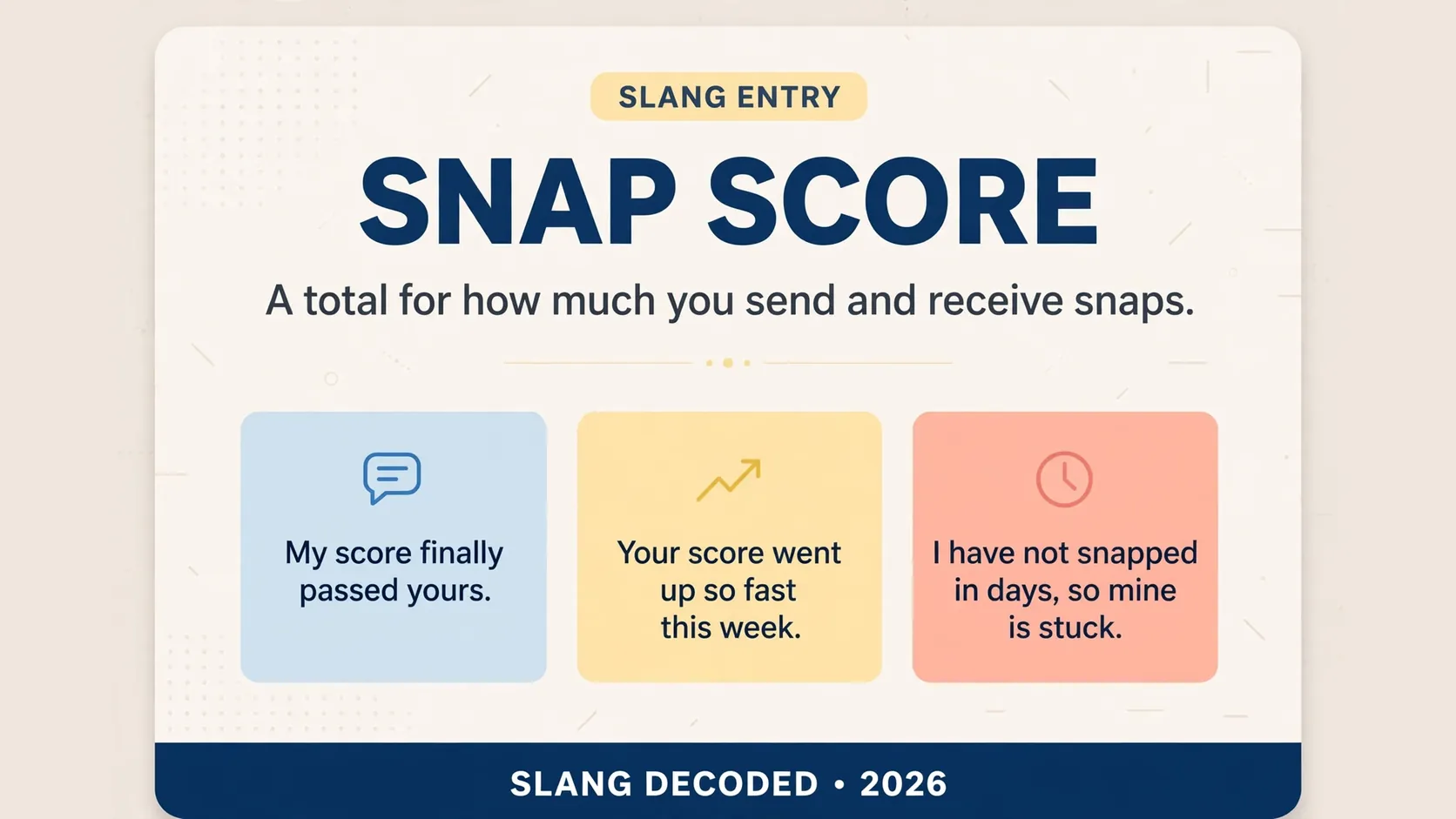
- My score finally passed yours.
- Your score went up so fast this week.
- I have not snapped in days, so mine is stuck.
- How is your score already that high?
- I only snap close friends, so mine is lower.
- Let us keep our streak and scores will climb.
- I do not care about the number, I like snapping you.
- Your score proves you are always on this app.
- Mine jumped after I snapped everyone yesterday.
Snap Score Etiquette Between Friends
Etiquette matters because a score is visible and easy to compare, even when no one means it as a competition. A good rule is to treat the number like a step count or a playlist count. It is fun to notice, but it is not a reason to pressure someone, tease them, or demand that they snap more. If a friend has a low score, it may mean they prefer other apps, they are busy, or they just do not like sending snaps every day, and none of that reflects on your friendship.
You can also protect your own comfort by deciding what you share. You do not have to announce your score, explain a jump, or defend a low total. A simple, light reply works well.
| Situation | Helpful Move | Avoid |
|---|---|---|
| Friend has a higher score | Congratulate them lightly | Acting jealous or distant |
| Friend has a lower score | Treat it as normal | Teasing them for it |
| Friend asks your score | Share only if you want | Feeling forced to share |
| Score jumps suddenly | Ask casually if curious | Accusing them of anything |
| Friend snaps you a lot | Reply when you can | Promising daily snaps |
| You want a break | Say you are pausing | Ghosting without a word |
| Group compares scores | Join only if fun | Ranking friends by number |
| Score feels competitive | Change the subject | Letting it cause a fight |
Snap Score Myths Friends Keep Repeating
Many myths about snap scores spread because the exact formula is not public. Friends repeat tips they heard in a video or a group chat, and those tips can sound convincing even when they are not proven. The safest way to think about it is simple. Normal snapping raises your score over time, and there is no secret shortcut that Snapchat has confirmed. Doubt neat or extreme claims until you see solid proof.
| Myth | Reality | Takeaway |
|---|---|---|
| High score means more friends | Means more snapping | Activity differs from friendship |
| Texting raises it fast | Snaps matter most | Send snaps to raise it |
| Watching stories raises it fast | Viewing is not snapping | Watch for fun only |
| There is a secret hack | No confirmed shortcut exists | Stick to normal use |
| Low score means dislike | Means less snapping | Judge by real actions |
| Scores reset each month | Totals carry over time | History stays with you |
| Sending widely multiplies hugely | Each snap counts once | Quality beats spamming |
| Score shows your top friend | Shows a total only | It names no one |
Quick Reference: Snap Score at a Glance
This quick reference pulls the main ideas together so you can answer a friend in seconds. Your score is a lifetime style total for snapping activity, it appears on a profile beside the username, and it rises when you send and open snaps. It does not measure how much someone likes you, how trustworthy they are, or how close your friendship is. Keep that distinction clear and the number feels less stressful.
Why Friends Compare Scores Even Though They Do Not Mean Much
Friends compare scores because numbers are easy to see and easy to joke about. A quick glance at a profile gives you a number, and that number invites a comment, a laugh, or a friendly challenge. It feels like a game, even when everyone knows it is not a serious measure of anything important.
That playful comparison can still turn awkward if someone takes it too seriously. You can keep it fun by treating a higher or lower number as trivia, not as proof of effort or closeness. That leaves space for real friendship signs like replies and support.
How to Talk About Snap Scores without Making It Weird
You can talk about scores in a relaxed way by keeping your tone light and your questions optional. Try a simple line like I noticed your score is climbing, you must be snapping a lot lately, and then let your friend decide how much to share. That approach invites a chat without turning it into an interview about their app habits.
If a friend seems shy about their number, do not push for details or screenshots. Change the subject to a story, a streak, or plans you share, and the moment passes quickly. Most friends appreciate that respect.
What to Do If Your Score Feels Stuck or Different
If your score feels stuck, check your own habits first before you worry about the number. You may be chatting more than snapping, watching stories more than sending them, or taking a natural break from the app. Any of those patterns will slow the climb, and none of them means something is wrong with your account.
If your score feels very different from your friends, remember that totals build over years, not days. A friend who has used Snapchat longer will often have a higher total even if you snap more right now. Snap when it feels fun and let the total follow your habits.
Frequently Asked Questions
What does snap score mean between friends?
It means the total number tied to how much a person has sent and received snaps, and friends often use it as a fun sign of Snapchat activity.
Does a higher snap score mean someone is a better friend?
No, it only suggests more snapping over time, and it does not measure loyalty, closeness, or care.
Can your snap score go down?
No, it generally stays the same when you are inactive and rises again when you start snapping.
How can you raise your snap score?
You can raise it by sending snaps to friends and opening the snaps they send you on a regular basis.
Should you worry if a friend has a much higher score?
No, different habits, start dates, and app preferences can explain the gap without saying anything about your friendship.