
A gen z dating terms glossary is a plain language guide to the short labels Gen Z uses for dating stages, boundaries, and breakups. You will find words for the early texting phase, the undefined middle, and the sudden ending. This guide sorts those words by stage, tone, and real use so you can read a text or a bio without guessing.
Gen Z dating talk moves fast because it lives on dating apps, TikTok captions, and group chats. A single word can signal interest, distance, or a hard stop, so this glossary pairs every term with tone and use.
Stage Terms That Name Where You Stand
| Term | What it means |
|---|---|
| talking stage | Learning about someone through texts and calls before a date |
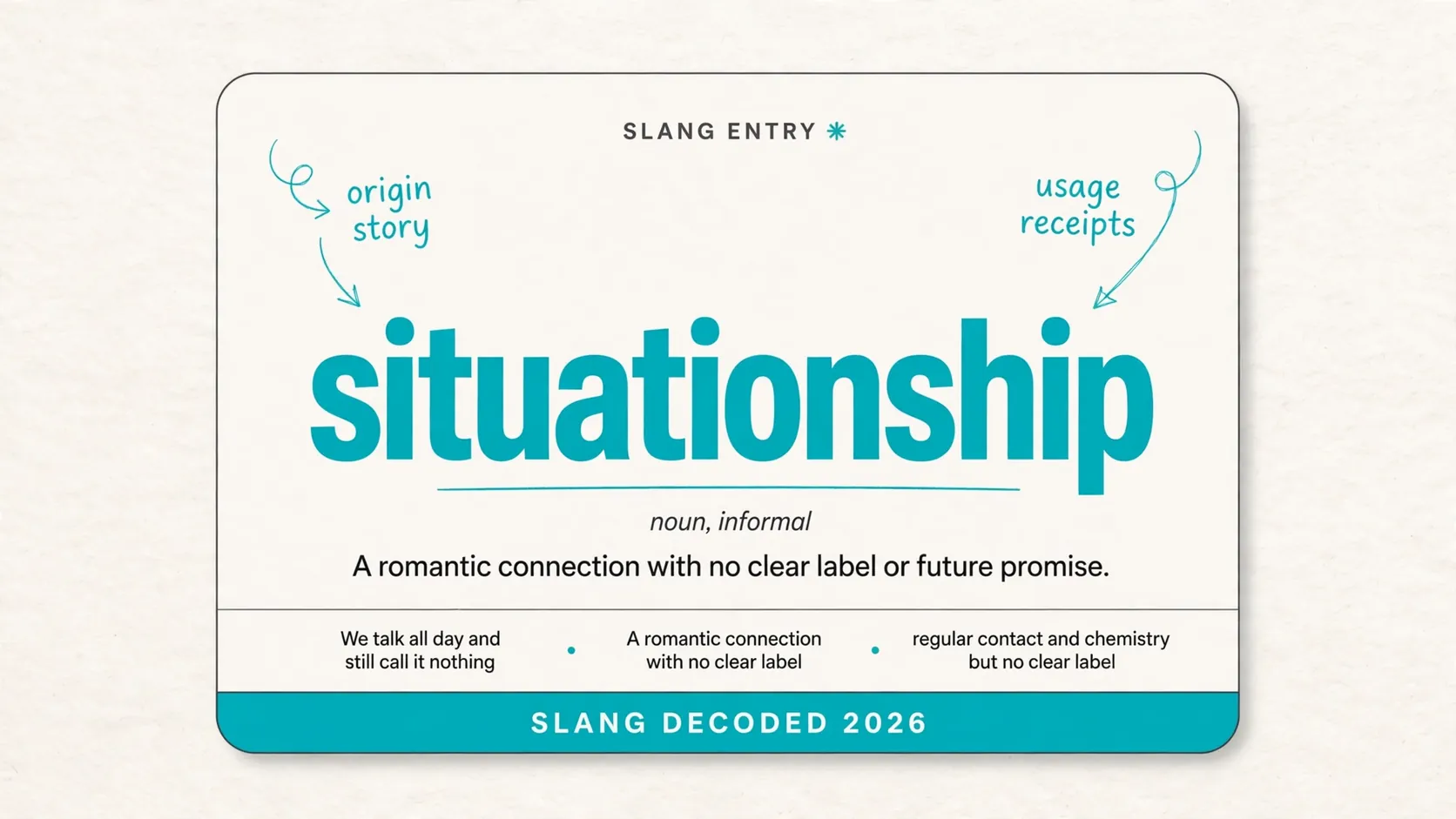
| situationship | A romantic connection with no clear label or future promise |
| dating | Going out regularly to learn if you want something more serious |
| exclusive | Dating one person only after a direct talk about options |
| official | Agreed as a couple in private and public, often in a bio |
| roster | People one person is talking to or dating at the same time |
| sneaky link | A private meetup kept quiet from friends and social feeds |
| cuffing | A cozy relationship for colder months after casual dating |
| slow burn | A connection building slowly through steady, low pressure contact |
| DTR | A talk that asks where you both stand |
Ending Terms That Explain a Sudden Silence
| Term | What it means |
|---|---|
| ghosting | Cutting off all replies and contact without explanation or goodbye |
| orbiting | Going silent in messages while still watching stories and liking posts |
| breadcrumbing | Sending just enough flirty messages to keep interest alive without plans |
| benching | Keeping someone as a backup while you date other people first |
| zombieing | Returning after ghosting someone, as if nothing awkward happened |
| slow fade | Replying less and less until contact quietly stops |
| haunting | Liking old posts or viewing stories after a breakup |
| pocketing | Hiding a partner from friends, family, and social media |
| cushioning | Keeping backup options warm in case a relationship ends |
How the Talking Stage Sounds in Real Chats
“We are just in the talking stage, so I am not reading into replies yet.”
Seen in a group chat. Expectations stay low.
“He texts every morning, but we have not had a real date yet.”
Seen in a dating story caption. Constant contact is not formal dating yet.
“I like her, but I do not want to rush the talking stage.”
Seen in a voice note to a friend. Steady contact comes before labels.
“The talking stage is fun until one person wants a label.”
Seen in a comment on an advice video. Unclear expectations cause friction.
“We talk all day and still call it nothing.”
Seen in a group chat late at night. Long chats outgrew the casual label.
“I asked where we stand and he said we are just talking.”
Seen in a comment thread about dating. One question reveals different expectations.
“Our talking stage lasted two months before dinner.”
Seen in a story recap. A long texting phase can still lead to dates.
“She replies fast, but never suggests meeting in person.”
Seen in a voice note between friends. Interest mixes with hesitation.
“I ended the talking stage because the texts were great and the effort was not.”
Seen in a comment on a dating post. Fun messages are not follow through.
Flags and Feelings You Will See in Bios
| Term | What it means |
|---|---|
| red flag | A warning sign of disrespect, dishonesty, or poor boundaries |
| green flag | A positive sign of respect, honesty, and steady communication |
| beige flag | A small odd habit that is neither attractive nor alarming |
| ick | A sudden loss of attraction after a small awkward moment |
| spark | Instant chemistry that makes conversation feel easy and exciting |
| butterflies | Nervous excitement before seeing someone you really like |
| catch feelings | Developing real romantic feelings sooner than you planned |
| delulu | Playful self teasing for a wildly hopeful crush fantasy |
| vibe check | A quick gut read on whether someone feels safe and fun |
Where Each Term Lives Online
| Term | Home base |
|---|---|
| talking stage | Dating apps, text threads, and group chats with daily contact |
| situationship | TikTok captions and advice videos about undefined relationships |
| ghosting | Text threads and dating apps, where silence is easy |
| orbiting | Instagram and TikTok, where story views stay visible |
| sneaky link | Private messages and close friend circles off public feeds |
| roster | Group chats and advice posts about juggling early options |
| red flag | Bios, comment threads, and videos about dating warning signs |
| ick | Short videos and comments retelling one moment of lost attraction |
| cuffing | Autumn posts and memes about settling down for winter |
| DTR | Advice videos urging couples to talk honestly about labels |
How Breadcrumbing and Benching Sound in Real Chats
“He sends a fire emoji weekly and then disappears for days.”
Seen in a group chat. Low effort contact holds attention without plans.
“She only texts when her other plans fall through.”
Seen in a comment on an advice video. The backup feeling is benching.
“I got a late night text after two weeks of silence.”
Seen in a voice note to a friend. A check in with no plan follows silence.
“He says he is busy, but still watches every story.”
Seen in a breakup post caption. Silence plus story views means orbiting.
“We never make plans, but he replies just enough to keep me hopeful.”
Seen in a comment thread about mixed signals. Small replies stretch uncertainty.
“I told him I need clear plans or I am out.”
Seen in a group chat. A firm boundary ends low effort contact.
“She kept me on the bench while dating someone else, then came back.”
Seen in a voice note between friends. Benching ends when the first option fades.
“A good morning text every few days is not real effort.”
Seen in a comment on a relationship video. Friendly contact differs from follow through.
“I stopped replying to crumbs and my weekends got calmer.”
Seen in a caption about boundaries. A small choice brings less stress.
Tone Guide for Playful, Serious, and Warning Terms
| Term | Tone | What it signals |
|---|---|---|
| situationship | Wry and honest | A real connection with no label or plan |
| talking stage | Light and early | Interest is real, but nothing is defined yet |
| ick | Playful and blunt | Attraction dropped fast over one awkward moment |
| red flag | Serious warning | A pattern worth noticing before you get closer |
| green flag | Warm approval | Steady respect and communication you can trust |
| ghosting | Sharp and final | Contact ended without explanation, which can hurt |
| breadcrumbing | Frustrated and knowing | Low effort contact keeps hope alive unfairly |
| cuffing | Joking and cozy | A seasonal wish for warmth and company |
| DTR | Direct and grown up | Time to talk clearly about labels and plans |
Pairs That Are Easy to Mix Up
| First term | Second term | Key difference |
|---|---|---|
| situationship | dating | Dating has regular dates and clearer intent, while a situationship stays undefined |
| talking stage | exclusive | The talking stage is early and open, while exclusive means one person only |
| ghosting | slow fade | Ghosting stops suddenly, while a slow fade thins out gradually |
| orbiting | breadcrumbing | Orbiting is silent watching, while breadcrumbing uses small flirty messages |
| red flag | ick | warns of a harmful pattern, while an ick is a sudden turnoffred flag warns of a harmful pattern, while an ick is a sudden turnoff |
| roster | sneaky link | A roster is several early options, while a sneaky link is one private meetup |
| cuffing | official | Cuffing is seasonal and cozy, while official is an agreed couple status |
| benching | breadcrumbing | Benching keeps a backup waiting, while breadcrumbing feeds hope with tiny contact |
| green flag | spark | A green flag shows steady character, while a spark shows instant chemistry |
What This Gen Z Dating Terms Glossary Gets Right About Modern Dating
Modern dating rarely moves in one straight line from first text to couple status, and that is why short labels took hold. People need words for the middle stages, the almost relationships, and the quiet exits, because old labels like dating or together leave too much unsaid. Once you know these dating terms, related slang like soft launching, hard launching, and beige flag will feel much easier to decode.
Clear labels also help you ask better questions instead of guessing at tone from one short reply. You can name what you want, name what feels off, and check whether the other person means the same thing by the same word. That shared language does not remove awkward talks, but it does make them shorter and kinder.
How to Use These Terms without Sounding Forced
Use a term only when it fits the facts, not because it sounds current in a caption or a chat. Say talking stage when you are still texting and learning about each other, and say situationship only when the connection is romantic and still undefined. Precision keeps the word useful, and it stops a playful label from hiding a real mismatch.
Match the setting too, because a joke term lands differently in a bio, a group chat, and a serious talk. An ick story can be funny with friends, while a DTR talk needs plain words, eye contact, and room for an honest answer. When in doubt, pair the slang with a simple sentence about what you actually want.
How to Set Boundaries with Clear Language
Boundaries work best when they are specific, calm, and stated early rather than hinted at through silence. You can say you want regular dates, a reply window that feels respectful, or a clear label by a certain point. A direct request gives the other person a real chance to meet it, adjust it, or say honestly that they cannot.
If a pattern repeats after a clear talk, trust the pattern more than the next charming message. Ghosting, benching, and breadcrumbing all rely on vague hope, so a firm line about plans and contact breaks that cycle fast. You do not need a harsh speech, just a steady standard you keep for yourself.
Why Dating Words Change so Fast
New dating words spread because dating itself keeps changing with apps, short video, and group chat culture. A fresh term can name a feeling that thousands of people already recognize, and once it lands in captions and comments, it travels in days. That speed is useful for shared jokes and warnings, but it also means meanings can blur as more people use the word.
Older terms stick around when they still solve a real problem, like ghosting for a sudden silence with no goodbye. Newer terms fade when the behavior fades or when a simpler word does the same job better. Watch how people actually use a word in context, and you will spot which terms are staying and which ones are already dating themselves.
Frequently Asked Questions
What does situationship mean in Gen Z dating?
A situationship is a romantic connection with regular contact and chemistry but no clear label, rules, or promise about the future.
What is the difference between the talking stage and dating?
The talking stage is early texting and getting to know someone, while dating means regular dates and clearer romantic intent.
Is ghosting always a red flag?
Ghosting is a sharp break in contact without explanation, so it often signals poor communication even when the reasons behind it are complicated.
What does sneaky link mean without the gossip?
A sneaky link is a private meetup kept quiet from friends and feeds, and it says more about privacy than about how serious the connection is.
How do I ask for a DTR without making it awkward?
Keep it short and kind by naming what you enjoy, what you want next, and asking whether the other person wants the same thing.