
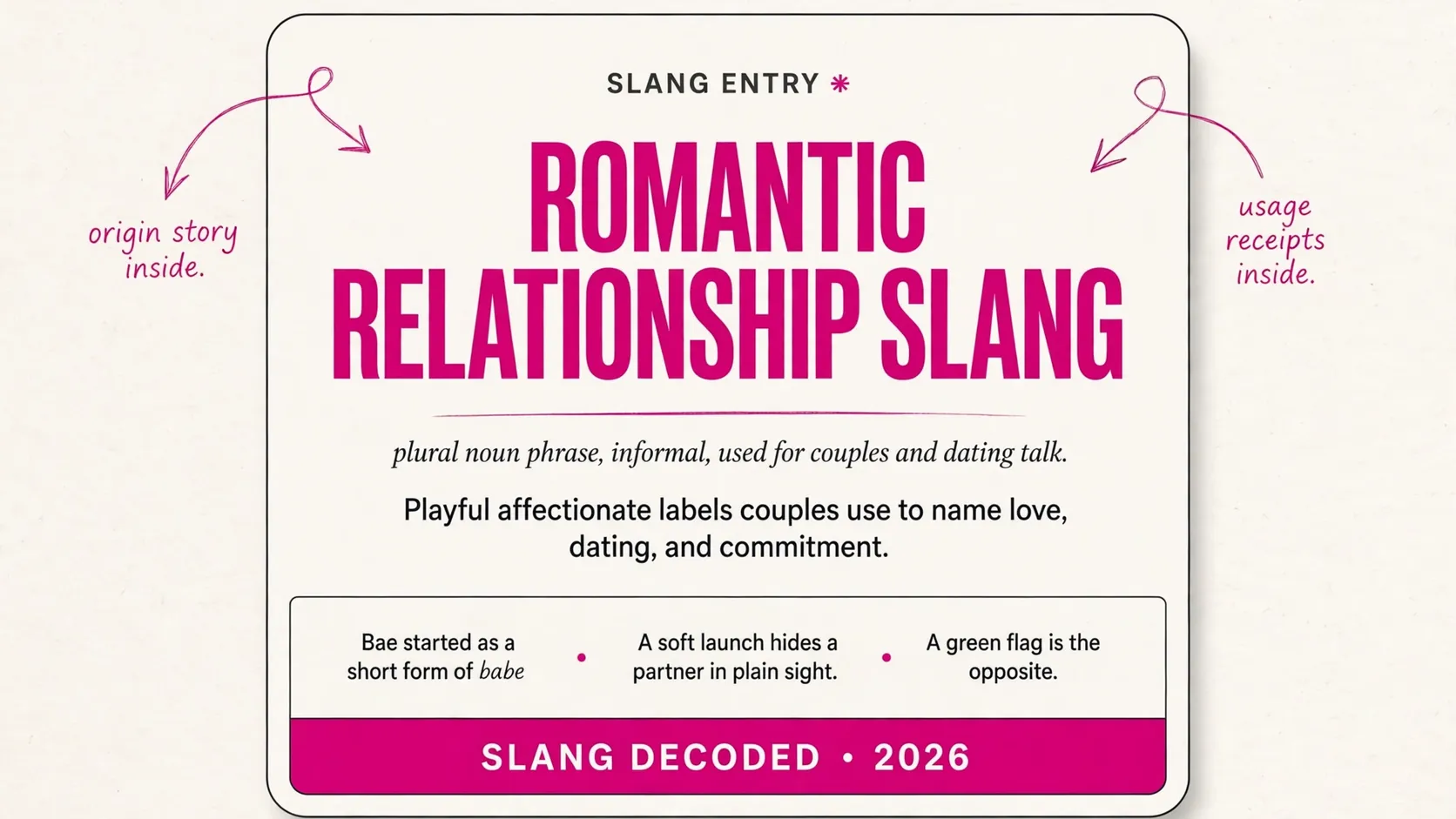
Romantic relationship slang words are playful, affectionate labels and phrases couples use to name love, dating, and commitment in everyday talk. If you are texting a crush, posting about a partner, or trying to decode a friend’s caption, these words give you a fast way to say how serious, sweet, or uncertain a connection feels.
They live on TikTok, Instagram, Snapchat, and in group chats, where tone travels faster than a long explanation. You will hear them in voice notes, bios, comments, and late night texts, and you will spot them in memes about dating, marriage, breakups, and second chances.
Bae and Boo and the Pet Names That Stuck
Bae started as a short form of babe and as a sweet way to say before anyone else, and it still works as a pet name, a caption, and a term of endearment. Boo carries a similar warmth, but it often sounds softer and more playful, like a nickname you use when you are teasing someone you adore. These names matter because they signal closeness without a formal label, and they let a couple sound affectionate in public without sounding stiff or overly serious.
| Term | What it signals in real use |
|---|---|
| Bae | A beloved partner or crush, used with pride and affection |
| Boo | A sweet, playful pet name for someone you are close to |
| Babe | A warm classic that works in texts, captions, and conversation |
| Love | A short, tender address that feels calm and sincere |
| Sweetheart | An old fashioned pet name made fresh again by captions and songs |
| Honey | A gentle, familiar name often used in long term couples |
| My person | A partner who feels like home, safety, and chosen family |
From Talking Stage to Official, the Labels in Order
Dating today rarely jumps from strangers to partners in one step, and slang gives each step a name. The talking stage is the early phase of frequent texts, flirting, and getting to know each other, usually before anyone has asked for exclusivity. Dating is a step up, with planned time together and clearer interest, while being official means you have both agreed on the label, the boundaries, and the public story.
| Stage | What it usually means |
|---|---|
| Talking stage | Flirting and texting often, but no agreed label yet |
| Dating | Going out regularly and showing clear romantic interest |
| Exclusive | Agreeing not to date or flirt with other people |
| Official | Calling each other boyfriend, girlfriend, or partner |
| Engaged | Planning marriage after a proposal both people accept |
| Married | A committed legal and personal partnership |
Soft Launches, Hard Launches, and Posting Your Person
does the opposite, with a clear photo, a tag, and often a caption that says this person is mine. Couples choose one based on privacy, timing, and how ready they feel to answer questions from friends and family.hard launch does the opposite, with a clear photo, a tag, and often a caption that says this person is mine. Couples choose one based on privacy, timing, and how ready they feel to answer questions from friends and family.soft launch hides a partner in plain sight. You might post a hand, a shadow, a shared meal, or a matching playlist without a face or a name, and followers are left to guess. A hard launch does the opposite, with a clear photo, a tag, and often a caption that says this person is mine. Couples choose one based on privacy, timing, and how ready they feel to answer questions from friends and family.
- Soft launch, a teasing reveal with no face and no name
- Hard launch, a clear public post that names the relationship
- Photo dump, a casual set of photos that may quietly include a partner
- Couple goals, a caption or comment praising a pair people admire
- Instagram official, a relationship made clear through posts and tags
Situationship Vocabulary for the in Between
Not every connection fits a neat label, and that is where situationship slang does its work. A situationship feels like a relationship in daily contact and affection, but it lacks a clear agreement about exclusivity, commitment, or the future. People use these words to be honest about ambiguity without sounding cold, and to ask for clarity when the in between starts to hurt.
| Term | What it usually means |
|---|---|
| Situationship | A romantic connection with no defined label or commitment |
| Almost relationship | A bond that feels close to love but never became official |
| Friends with benefits | Friendship plus physical closeness, usually without romance |
| Talking | An early, low pressure phase of getting to know someone |
| On a break | A paused relationship, with rules that couples must agree on |
| Complicated | A status that signals mixed feelings or unclear boundaries |
Texts, Dms, and the Shorthand of Affection
Short messages carry a lot of feeling when you know the code. A good morning text can set the tone for a whole day, and a good night message can feel like a small ritual of care. Couples also use emojis, voice notes, and inside jokes to say things that feel too big, too shy, or too silly to write out in full sentences.
- Good morning text, a sweet check in that starts the day with care
- Good night text, a closing message that says you are thinking of them
- I miss you text, a simple honest note during time apart
- Thinking of you, a low pressure message that still feels romantic
- Check in text, a caring note after a hard day or a long silence
- Voice note love, a recorded message that carries tone and warmth
When It Gets Serious, the Words Couples Actually Use
Serious does not always mean formal, and modern couples have warm slang for commitment too. Partner has become a favorite because it sounds equal, grown up, and free of old assumptions about gender or roles. Wifey and hubby can sound playful in captions, but they usually signal deep affection and a future oriented mindset rather than a legal status.
| Term | What it usually means |
|---|---|
| Partner | A committed romantic equal, used across many kinds of couples |
| Wifey | A playful, affectionate way to describe a serious girlfriend or wife |
| Hubby | A playful, affectionate way to describe a serious boyfriend or husband |
| Ride or die | A partner who stays loyal through good times and hard times |
| Soulmate | A person who feels like a rare, deep, and lasting match |
| Endgame | A couple people believe will last, often used by fans and friends |
| Power couple | Two people who support each other and succeed together |
Breakup and Bounce Back Slang, Said Gently
Breakup slang can sound harsh online, but in real life people use it to protect their feelings and find humor after hurt. Ghosting means ending contact without explanation, while orbiting means watching an ex online without replying. Knowing these words helps you name what happened, set a boundary, and move on without blaming yourself for someone else’s silence.
- Ghosting, ending contact suddenly with no explanation
- Orbiting, watching an ex on social media without direct contact
- Closure, a final honest talk that helps both people move forward
- Moving on, choosing healing and new routines after a breakup
- Glow up, a visible return to confidence, health, and joy
- Bounce back, recovering with humor, friends, and self care
Red Flags, Green Flags, and the Flags in Between
Flag slang turns dating observations into quick warnings and compliments. A red flag is a behavior that suggests trouble, such as disrespect, dishonesty, or constant pressure. A green flag is the opposite, a sign of safety and care, such as listening well, respecting boundaries, and showing up on time. A beige flag is a small, harmless quirk that is neither good nor bad, just very human.
| Flag | What it usually signals |
|---|---|
| Red flag | A warning sign worth taking seriously |
| Green flag | A healthy sign, like honesty, kindness, and consistency |
| Beige flag | A harmless quirk that makes someone lovable or odd |
| Pink flag | A small concern to watch, not yet a clear deal breaker |
| Yellow flag | A caution sign that calls for a calm conversation |
How Couples Pick a Word That Fits
You do not need to use every term on this list, and the best couples usually pick only a few that feel natural. Try a pet name in a private text first, notice how your partner reacts, and keep the words that make you both smile. If a label feels forced, awkward, or too public, drop it and choose something simpler that still feels like you.
A good test is whether you would say the word out loud without laughing at yourself in a bad way. Some couples love bold captions and public nicknames, while others prefer quiet words that only they understand. Both styles are valid, and the right word is the one that fits your humor, your history, and your comfort with attention.
Why Tone Matters More than the Term
The same word can sound romantic, funny, or rude depending on tone, timing, and trust. Bae can feel sweet from a partner and strange from a stranger, and a joke about a situationship can comfort one friend and sting another. You should read the room, check the relationship, and avoid using a serious label as a joke before you both agree on what it means.
Tone also matters in texts, where a short reply can be read as cold even when you meant to be busy. A heart emoji, a voice note, or a quick follow up can soften a message and show care. When in doubt, add warmth, ask how the other person feels, and remember that clarity is kinder than cleverness.
Using These Words without Sounding Forced
Slang works best when it grows out of real conversation rather than a list you memorize. You will hear the same crowd use situationship, talking stage, and soft launch when they describe modern dating, and those words sound natural because they match real experiences. Borrow the terms that describe your life, skip the ones that do not, and let your own inside jokes fill the gaps.
You can also mix slang with plain language so your meaning stays clear. Say that you are dating exclusively, then add the playful label if you like it, and your partner will know both the feeling and the fact. That balance keeps romance fun without turning a serious talk into a guessing game.
What to Say When You Are Not Sure Yet
Uncertainty is normal, and slang can help you name it without pressure. You might say you are still in the talking stage, still figuring things out, or still getting to know each other, and those phrases give you room to breathe. They also give the other person a fair chance to say whether they want the same pace.
If you want more clarity, ask a simple question in plain words. Ask what label feels right, what exclusivity means to each of you, and how you both want to show the relationship online. A short honest talk now can prevent a long confusing situationship later, and it can turn a fun connection into something steady and kind.
Frequently Asked Questions About Romantic Relationship Slang
What are romantic relationship slang words in simple terms?
They are short, informal words couples and daters use to name love, dating stages, affection, and commitment in everyday talk.
Which romantic relationship slang words are most common in 2026?
, and green flag remain among the most widely used terms.ride or die, and green flag remain among the most widely used terms.
Is it okay to call someone bae if you are not official yet?
It can be fine if the feeling is mutual, but check comfort first, since pet names can imply more closeness than you have agreed on.
What is the difference between dating and a situationship?
Dating usually involves planned time together and clearer romantic intent, while a situationship has closeness without an agreed label or commitment.
How can I use relationship slang without sounding awkward?
Use only terms that fit your real life, try them privately first, and pair playful slang with plain language when clarity matters.