
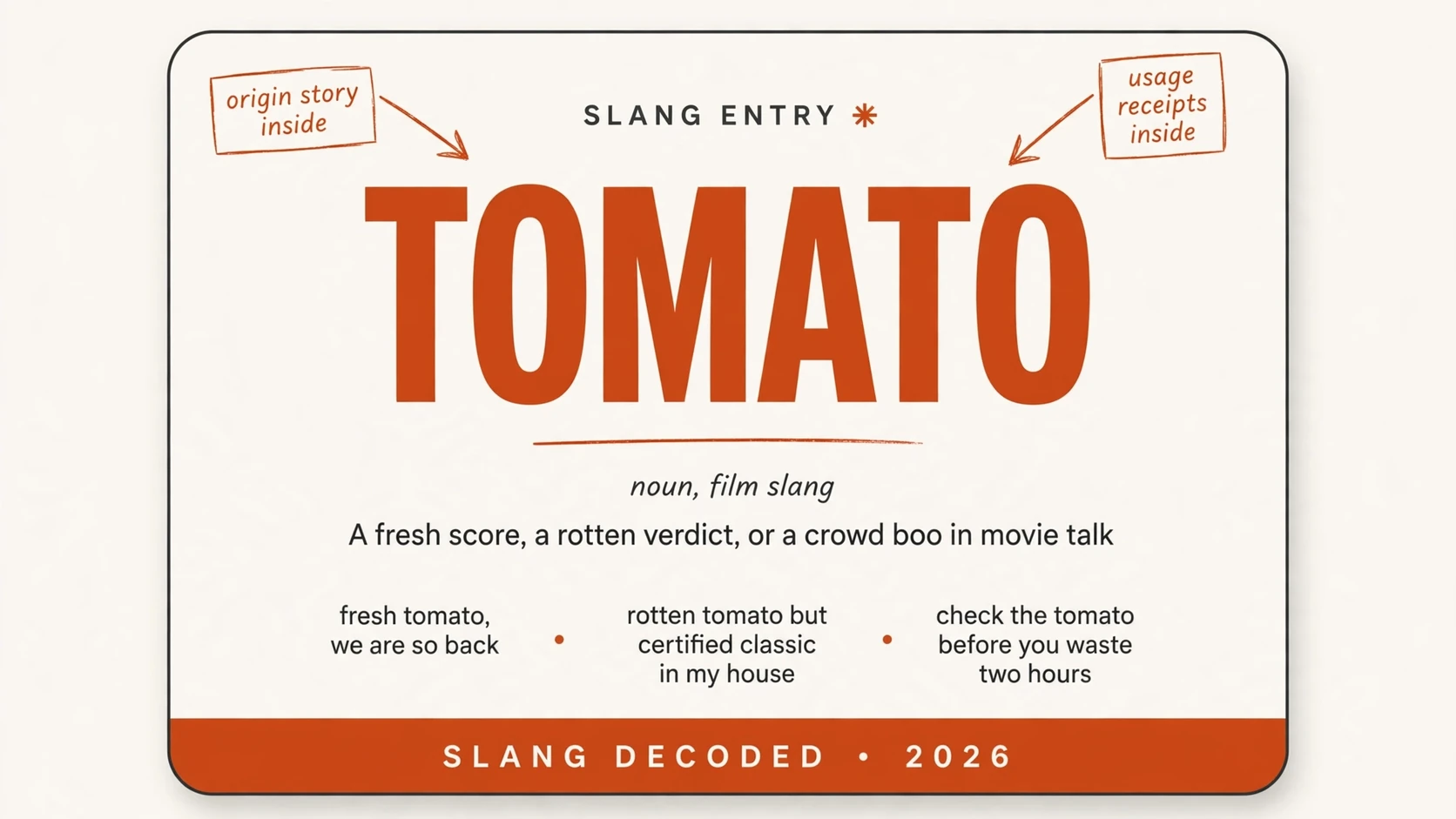
A tomato in movie talk means a Rotten Tomatoes score, a fresh hit, a rotten flop, or an old crowd boo. If you searched what does tomato mean in movies, you landed in the middle of film internet shorthand, where one red fruit can praise a movie, roast it, or warn you before you buy a ticket.
You will see it in reviews, memes, group chats, and opening weekend threads. Sometimes it is a score, sometimes a joke about a bad performance, and sometimes both at once, with tone telling you which one the poster meant.
Tomato Decoded at a Glance
| Piece | What it signals |
|---|---|
| Fresh tomato | Critics mostly liked the film and the Tomatometer leans positive |
| Splatted tomato | Critics mostly panned the film and the score leans rotten |
| Certified Fresh | A strong positive score that earns a special badge |
| Audience Score | What regular viewers thought, beside the critic score |
| Popcorn bucket | The audience score symbol, full for loved films and tipped for panned ones |
| Tomato emoji | A quick stand in for a score, a review, or a rotten verdict |
| Throwing tomatoes | An old heckling image for booing a terrible act |
| Tomato meter | Casual slang for the Tomatometer itself and its percentage |
| Tomato discourse | The online argument after a surprising score |
From Stage Boos to Fresh Scores
| When | What happened |
|---|---|
| Long before film | Theatre audiences used rotten food to heckle bad acts |
| Early stage tradition | Tomato throwing became the classic image of a crowd rejecting a performer |
| 1998 | Rotten Tomatoes launched as a site collecting film reviews in one place |
| Early 2000s | The Tomatometer became a quick guide for moviegoers checking a new release |
| 2010s | Social media turned scores into memes and opening weekend arguments |
| Streaming era | Viewers checked a score on a phone before pressing play at home |
| Review bombing era | Fans learned scores can be gamed or skewed by early reactions |
| TikTok era | Short videos turned a fresh or rotten label into a punchline in seconds |
| Today | Tomato talk now covers scores, splits, memes, and old heckling jokes |
Where Tomato Talk Travels Online
| Platform | How tomato shows up |
|---|---|
| Film Twitter | Score screenshots and quote posts arguing with a percentage |
| TikTok | Quick verdict videos, green screen score reveals, and roast edits |
| Long threads on why critic and audience scores split | |
| Letterboxd | Diary entries and reviews that joke about a tomato verdict |
| YouTube | Review videos and score reaction clips |
| Story polls and meme pages pairing a tomato graphic with a film | |
| Discord | Movie night chats where one score can settle or start a debate |
| Group chats | Friends sending a tomato emoji instead of a full review |
| News sites | Headlines using a fresh or rotten label as shorthand for reception |
The Tomato Tone Meter
| Reading | How it lands |
|---|---|
| Playful praise | Light and celebratory, like cheering a surprise hit |
| Genuine warning | Helpful and direct, warning a film may not be worth the ticket |
| Sarcastic roast | Sharp and funny, using a splat to mock a hyped flop |
| Defensive fandom | Protective and heated, pushing back when a beloved film scores low |
| Ironic hype | Deliberately over the top, praising a messy film because it is fun |
| Casual shorthand | Neutral and quick, just a faster way to say check the score |
| Disappointed sigh | Sad and tired, the sound of a long awaited film landing rotten |
| Argument starter | Combative and loud, posted to provoke replies in a thread |
| Meme energy | Absurd and visual, more about the joke than the actual review |
Words That Travel with Tomato
| Word | Connection |
|---|---|
| Tomatometer | The official critic percentage behind most tomato slang |
| Certified Fresh | The badge for a high and steady positive score |
| Audience Score | The viewer percentage that often disagrees with critics |
| Popcorn meter | The audience score symbol that replaced the older audience rating |
| Splat | Slang for a rotten rating and the splatted tomato icon |
| Fresh | Short for a positive verdict, a good score, or a loved film |
| Rotten | Short for a negative verdict, a low score, or a panned film |
| Review bomb | A coordinated push to drag a score down or lift it up |
| Score split | The gap between what critics liked and what audiences liked |
Who Drops Tomato in Movie Talk
| Group | Why they use it |
|---|---|
| Casual viewers | They want a fast yes or no before choosing a film |
| Film fans | They follow scores closely and argue about them |
| Critics and reviewers | They explain or push back on how a score gets read |
| Meme creators | They turn a fresh or rotten label into a joke |
| Fandom accounts | They defend a franchise film when its score looks harsh |
| Box office watchers | They link a score to ticket sales and opening buzz |
| Streaming scrollers | They use a score to pick something fast on a crowded home screen |
| Younger viewers | They grew up with score screenshots and tomato emoji as normal talk |
| Older moviegoers | They know the older throwing joke and now meet the score version |
Tomato in the Wild Line by Line
“that tomato is lying, this movie ate“
Seen on film Twitter after a surprise score drop A fan defends a film they loved even though critics were cold on it
“fresh tomato, we are so back”
Seen on TikTok in an opening weekend reaction video A viewer celebrates a strong score for a long awaited sequel
“bro got splatted before the credits even rolled”
Seen in a Discord movie night chat Friends joke that reviews turned rotten almost instantly after release
“check the tomato before you waste two hours”
Seen in a group chat before a streaming pick A friend uses the score as a quick filter for a Friday night watch
“rotten tomato but certified classic in my house”
Seen on Letterboxd in a short diary review A viewer separates their personal love for a film from its critic score
“the audience tomato and the critic tomato are fighting again”
Seen on Reddit in a thread about a score split A poster points out that viewers and critics clearly disagreed on a release
“throwing tomatoes at that third act fr“
Seen on TikTok under a spoiler free rant A viewer borrows the old heckling image to roast a weak ending
“popcorn full, tomato fresh, night saved”
Seen on Instagram in a story after a cinema trip A viewer sums up a great night out in score shorthand
“do not trust one tomato, read three reviews”
Seen on YouTube in a review roundup comment A viewer warns against letting a single percentage decide everything
Fresh Versus Rotten Usage Lines
“fresh all the way, go see it opening night”
Seen on film Twitter before a big premiere Pure praise that turns a score into a recommendation
“rotten but fun, bring snacks and low expectations”
Seen on TikTok in a guilty pleasure review A viewer admits a low score and still recommends the ride
“certified fresh and it actually deserves it”
Seen on Reddit after a prestige drama release Praise that agrees with critics instead of fighting the score
“splatted by critics, loved by everyone I know”
Seen in a group chat after a comedy release A classic split where friends trust each other over the meter
“tomato said rotten, my group chat said masterpiece”
Seen on Letterboxd in a five star diary entry A fan proudly claims a personal verdict over the official one
“fresh score, rotten vibes in the comments”
Seen on Instagram under a meme about a divisive film A poster notes that a good score did not stop the argument
“throw the tomatoes, that remake earned them”
Seen on YouTube in a roast review comment Harsh and funny, using the heckling image for a failed remake
“one rotten tomato does not ruin a whole franchise”
Seen on Discord during a series rewatch debate A calmer take that puts a single bad score in context
Why Tomato Stuck as Movie Shorthand
A tomato works because everyone gets the image instantly. A fresh one looks tasty and inviting, while a splatted one looks messy and rejected, so you do not need a paragraph to explain a verdict. Film internet loves that kind of speed, and a score graphic does the same job in a single glance on a crowded feed.
It also stuck because scores became social. People do not just read a percentage alone anymore, they screenshot it, argue about it, and build jokes around it before a film even opens. That shared ritual turned a review aggregator symbol into everyday movie slang that travels far beyond review sites.
What Does Tomato Mean in Movies When Fans Argue Online
When fans argue online, tomato usually means the score they are fighting about, not the fruit itself. One side waves a fresh badge as proof a film is good, the other side points to a splat as proof it is bad, and both sides forget that a percentage only counts how many reviews leaned positive. Fans who track tomato talk also trade terms like popcorn meter, certified fresh, and audience score when they argue about a release.
That is why the same word can sound like praise in one thread and an insult in the next. Context, fandom, and timing decide the meaning, and a joke in a meme page can read very differently from a serious review thread. If you want the real story, read past the tomato and check what reviewers actually said.
How to Read a Tomato Score without Getting Played
Start by checking whether the number comes from critics, audiences, or both, because those groups often disagree for good reasons. A critic score measures how many professional reviews leaned positive, while an audience score measures how regular viewers rated the film, so a split does not automatically mean someone is wrong or lying.
Then look at the review count, the date, and a few actual reviews before you decide. Early scores can shift as more reviews land, and coordinated campaigns can bend a number for a day or two. A tomato is a useful starting point, but the smartest movie pick still comes from knowing your own taste and reading past the percentage.
Frequently Asked Questions
What does tomato mean in movies in simple terms?
It usually means a Rotten Tomatoes verdict, with fresh for mostly positive reviews and rotten for mostly negative ones.
Is a tomato score the same as a star rating?
No, a Tomatometer percentage shows how many reviews leaned positive, not how high reviewers scored the film on average.
Why do people say throwing tomatoes at a movie?
It borrows an old theatre heckling image where a crowd pelted a bad act, and fans now use it as a funny roast for a terrible film.
Can a rotten movie still be worth watching?
Yes, many viewers love films critics panned, especially comedies, horror films, and messy blockbusters that are fun with friends.
Where did the tomato score idea come from?
It comes from Rotten Tomatoes, a review site launched in 1998 that turned critic verdicts into fresh and rotten symbols.